

Optimising Tourniquet De-escalation Protocols and Techniques for Non-Medical Defence Providers
ABSTRACT Compared with advanced healthcare providers (HCP), organisational protocols for tourniquet de-escalation by non-medical (NM) defence personnel require greater emphasis on simplicity, procedural efficiency, minimised decision-making and redundancy. This article describes how the 2026 TCCC tourniquet de-escalation guidelines may be further developed to incorporate design features specific to the requirements of NM defence providers. DISCUSSION… Read more »
Disease Mortality during Dutch and American Colonial Counter-Insurgency Operations in Southeast Asia
Abstract: Counterinsurgency operations over a century ago were marked by casualty lists dominated by infectious diseases, not combat injuries. For decades, Dutch soldiers fought in Aceh Province of the then Netherlands East Indies (NEI, now Indonesia) to incorporate the Muslim Sultanate into their colonial empire. Mortality rates of up to 160/1000 in 1874 were more… Read more »
Book Review: From Shell Shock to PTSD
Note: Content within this review and book regarding mental health challenges may be distressing for some people. Support is available through your Chain of Command, Chaplaincy, Health Centre, Lifeline 13 1144 or Open Arms 1800 011 046. An Australian soldier sits in an underground advanced dressing station near Ypres, Belgium, in September 1917. Oblivious to… Read more »
From Battle to Balance: Fletching, Meaning-making and Veteran Recovery
Abstract This commentary reflects on the ancient craft of fletching as a personally meaningful practice that supports recovery and reintegration following military service. Drawing on lived experience, the essay situates fletching within broader conversations in veteran studies concerning identity loss, moral injury and the limits of exclusively verbal or clinical approaches to healing. Rather than… Read more »
Psychotherapy Versus Pharmacotherapy for PTSD in Military Personnel: A Systematic Review of the PROGrESS Research Program
ABSTRACT Background: For military personnel, posttraumatic stress disorder (PTSD) continues to be a major problem. Although medication and trauma-focused psychotherapy (TFP) are well-established treatments, research on their relative and combined effectiveness in combat veterans needs to be synthesised. This review synthesises findings from the PROlonGed ExpoSure and Sertraline (PROGrESS) research program to inform military health… Read more »
Recent US Veteran Cohorts Develop Chronic Health Conditions at Earlier Ages: Evidence from the Health and Retirement Study
Introduction The US veteran population is shrinking in size while its age composition is also changing1,2 As earlier generations pass away, more recent cohorts account for a growing share of veterans entering older adulthood, when chronic disease and functional limitations become more common. Whether these cohorts are reaching older ages in better or worse health… Read more »
Combat Tourniquets and the Prevention of Iatrogenic Limb Ischaemia in Modern Warfare
Abstract Health support for anticipated Australian Defence Force (ADF) operations necessitates the capability to deliver prolonged austere field care in response to the constraints of contested mobility, extended evacuation distances, resource limitations and tactical requirements. Combat tourniquet application in the context of Prolonged Casualty Care (PCC) represents an emerging challenge at all levels of healthcare… Read more »
Treating and Managing SW & I
Abstract This paper proposes a SW&I Spiritual Health Protocol–Provisional (SW&ISH–P) that will expand on the spiritual aspects of the treatment and management of Spiritual Wounds and Injuries (SW&I) previously discussed in this journal.1 It is set against the fundamental principle that the SW&I is likely to occur within a broader injury context and, as such,… Read more »
Artificial Intelligence in Outpatient Diagnostic Workflow: A Systematic Review with Implications for Military Health Systems
Introduction Outpatient services frequently suffer from prolonged in-clinic waiting times, inefficient workflows and delays in obtaining diagnostic results before specialist consultations.1 These inefficiencies negatively affect patient satisfaction, strain hospital resources, and, in military healthcare, may contribute to delays in evaluation and treatment pathways relevant to operational readiness.2 Factors contributing to prolonged waiting times include structural… Read more »
Residential and Inpatient Interventions for Military Veterans within Forensic and Secure Mental Health Services: A Scoping Review
Introduction Armed Forces veterans are at increased risk of developing mental health difficulties, particularly post-traumatic stress disorder (PTSD), depression, and substance use disorders (SUDs).1 This heightened vulnerability is closely linked to exposure to combat-related trauma as well as the complex psychological, social and occupational challenges associated with transitioning back into civilian life.2,3 Suicide rates among… Read more »
Evaluation of Self-Perceptions of Physical Demand and Physical Fitness of Volunteers during the Adaptation Internship of Reserve Officers of the 2nd Class of the Brazilian Air Force
Abstract The recruitment and mobilisation of higher education professionals for temporary military service occurs annually in the Brazilian Air Force occur annually. After the selection process, volunteers complete a Technical Adaptation Internship to prepare future junior officers for the specific conditions of military service. These courses generally last approximately two months and have high physical,… Read more »
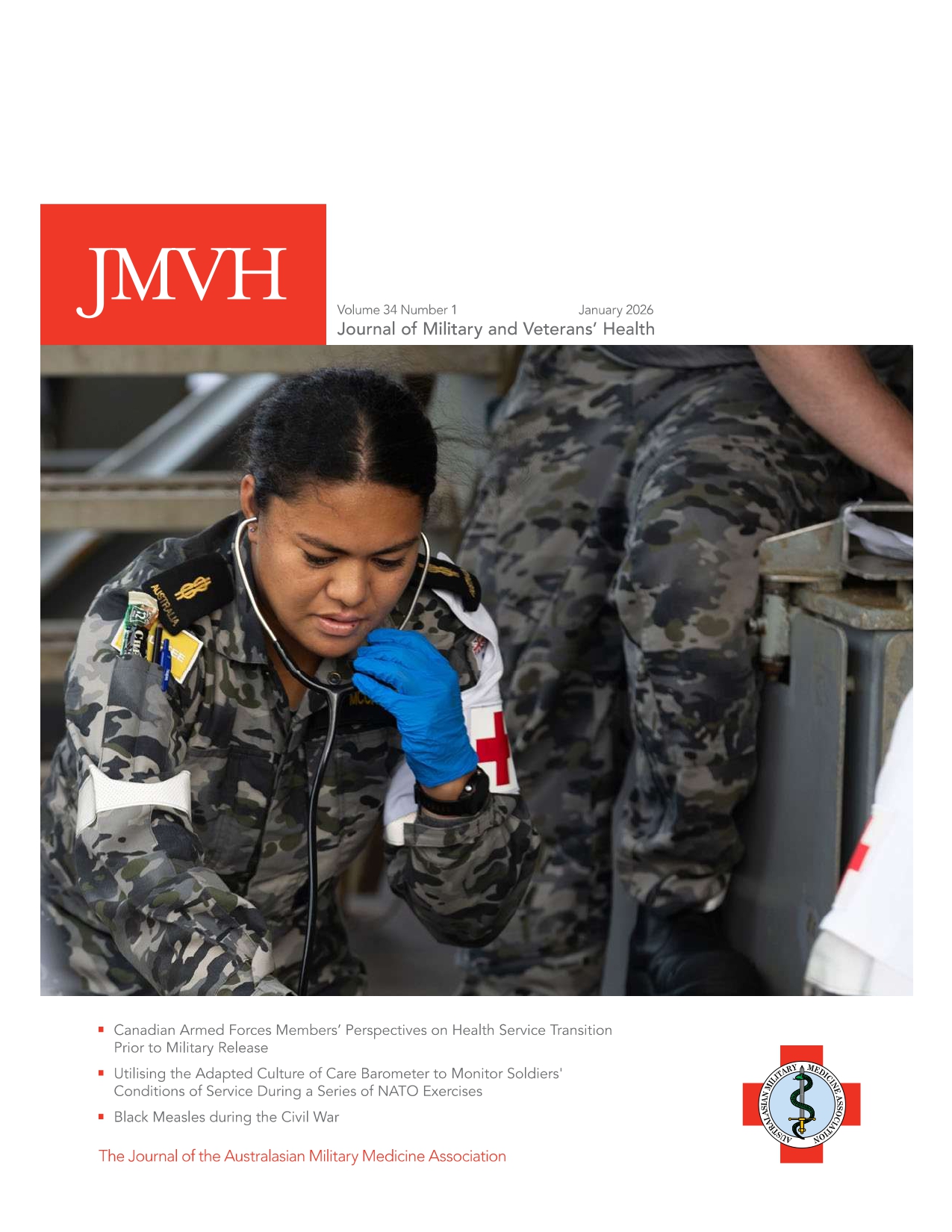
Editorial – JMVH
Thirty-four years ago, the initial issue of the Journal of Military and Veterans’ Health (JMVH) (then Australian Military Medicine (AMM)) was published in February 1992. SQNLDR James Ross was the inaugural President and the first article published, fittingly on “Should Defence Force Personnel receive Influenza Vaccine?”, also came from James Ross. By 1993, CMDR Russ… Read more »
The Gender Debate: Effects of 10-weeks Strength Training on Operational Readiness for Females in the Military
ABSTRACT Introduction: Military service is a physically demanding occupation, and fewer women than men meet the military fitness standards, especially in manual handling and load carriage. Therefore, integrating women into physically demanding military roles requires effective physical conditioning programs to ensure operational readiness. Methods: Twenty-eight female soldiers were randomly assigned to either a 10-week gender-specific… Read more »
Medical Corps Disease Mortality during the First World War: Australia vs. Turkey
Medical corps officers were often the ‘canary in the coal mine’ for infectious disease mortality in armies during the pre-antibiotic era. This means that medical officers could be among the first indicators of a serious medical problem (See https://wordhistories.net/2018/03/31/canary-coal-mine). Deployed forces, however, could experience exotic threats, such as malaria and cholera, that could kill both… Read more »
United States Service Members’ Resilience, Wellbeing and Social Support Resources Post-deployment
Abstract Introduction: Military service members encounter numerous stressors post-deployment. Unit cohesion, community, social connections and leadership can serve as resilience support systems and may help improve service members’ wellbeing. This research examines the perceived value of these support systems for service members post-deployment. Methods: A cross-sectional convenience sample of 78 United States military officers (n=54)… Read more »
Burnout, Life Satisfaction, and Social Exclusion Levels of Retired Non-Commissioned Officers and the Relationships Between These Phenomena: The Case of Türkiye
Abstract Background: Research on the social and psychological conditions of retired non-commissioned officers (NCOs) remains limited. Therefore, examining burnout, life satisfaction and social exclusion among retired NCOs is critical. Objective: This study aimed to measure levels of burnout, life satisfaction and social exclusion among retired NCOs in Türkiye and to examine the relationships among these… Read more »
Prevalence of Long-Term Health Conditions in Current-serving, Previous-Serving and Never-Serving Australians: An Age-Adjusted Comparative Analysis using 2021 Census Data
ABSTRACT Background Long-term health conditions (LTHC) are major contributors to morbidity and mortality in Australia and may be more prevalent in Australian Defence Force (ADF) veterans. Previous analyses are limited because they do not control for age and sex confounding or disaggregate by ADF service status. Purpose We aimed to estimate and compare the age-standardised… Read more »
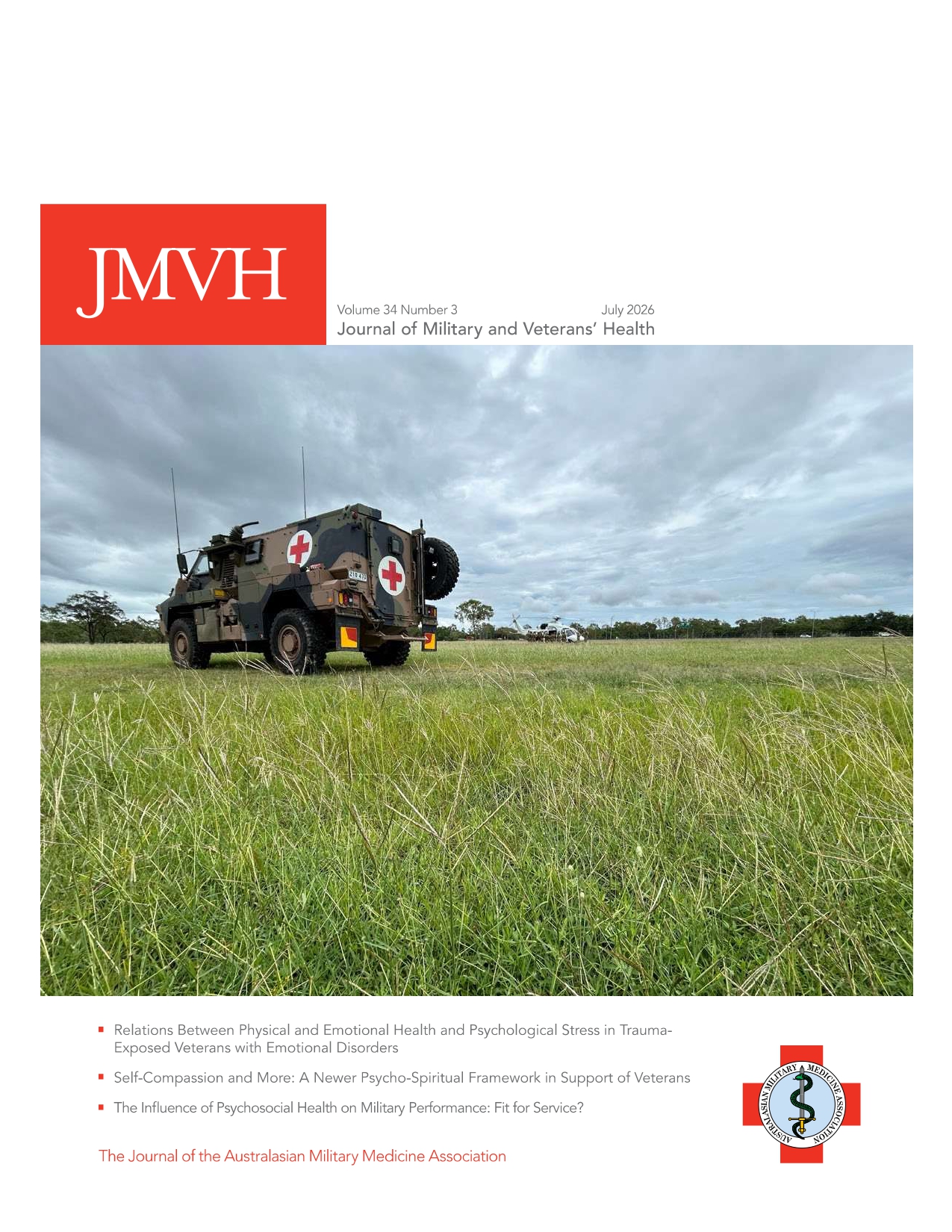
The Influence of Psychosocial Health on Military Performance: Fit for Service?
Abstract When considering military fitness, the focus must be on psychological and physiological ability and thus suitability for service, determinants which are themselves influenced by health. Health, especially in the military context, is the product of several factors (including psychosocial ones), as will be highlighted in the current study. The influence of psychosocial health and… Read more »
Hookworm infections in the Military
Abstract Soil-transmitted helminths such as hookworm are rarely a problem for military units unless they directly contact faecally contaminated soil during tropical operations. Localised epidemics incapacitating small infantry units have been recorded in the Solomon Islands and Bougainville during World War II and in Vietnam, Grenada and Sierra Leone more recently. Scattered hookworm infection cases… Read more »
Editorial – The 1991 Gulf War
Thirty-five years ago, 1872 Australians, including Australian Defence Force (ADF) health personnel, served in the Persian Gulf between August 1990 and the ceasefire in February 1991. While primarily a Royal Australian Navy task group, involving HMAS Adelaide, HMAS Darwin, HMAS Sydney, HMAS Brisbane, HMAS Success and HMAS Westralia in maritime interdiction, sanctions enforcement and replenishment… Read more »
The Effects of Current Cold Chain Management Equipment in Controlling the Temperature of Thermolabile Medications and Temperature Sensitive Diagnostics, Dressings and Fluids in A Routine Australian Defence Force Operating/Exercise Environment
E Daly, N Evans, S Holmes-Brown Abstract The purpose of this pilot study was to analyse the current cold chain storage methods of Class 8 stores, specifically thermolabile medications and temperature-sensitive diagnostics, dressings and fluids, for the Australian Army in a training area within Australia. This research was designed to identify deficiencies in current storage… Read more »
Medical CBRN Defence in the Australian Defence Force
Major David J Heslop, Commander Neil Westphalen Introduction This article focuses on a specialist area of military medicine, following a series of recently published papers regarding occupational and environmental medicine in the ADF.1 They assert that high rates of preventable workplace illness and injury indicate the need to improve the management of occupational and environmental… Read more »
The Australian Army’s Two ‘Traditional’ Diseases: Gonorrhea and Syphilis — A Military-Medical History During the Twentieth Century
Ian Howie-Willis Abstract Two sexually transmitted diseases (STDs) marched in lockstep with the Australian Army in most, if not all, its overseas campaigns during the twentieth century. Gonorrhoea and syphilis, bacterial infections spread most commonly through sexual intercourse. This article illustrates through reference to the Australian Army’s major overseas deployments; from the Boer War at… Read more »
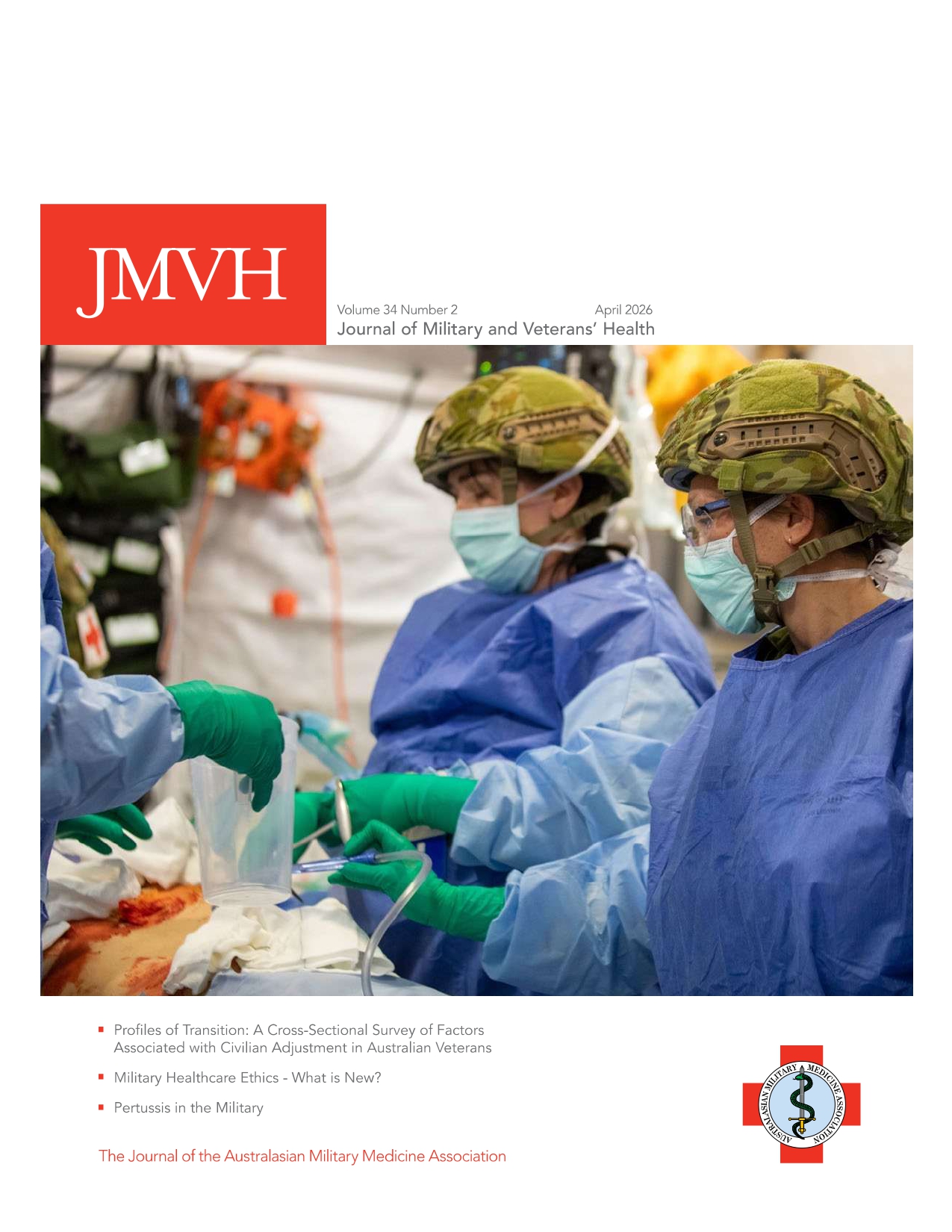
Assessing Medical Suitability for Employment and Deployment in the ADF
Assessing Medical Suitability for Employment and Deployment in the ADF Commander Neil Westphalen, Royal Australian Navy Reserve Introduction This article follows previous papers by the author, regarding occupational and environmental medicine in the ADF.1 They asserted that high rates of workplace illness and injury indicate the need to improve the management of hazards associated with… Read more »
Concussion within the Military
Concussion within the Military Roy Beran CMDR rtd, MBBS, MD, FRACP, Dr Sonu Bhaskar MD, PhD Abstract Concussion or mild traumatic brain injury (mTBI) is associated with long-term impairments in military personnel. Diagnosis of the condition remains clinically challenging. Neurological examination and cognitive symptoms may not accurately map the nature and severity of underlying brain… Read more »
Lessons Learned: The Australian Military and Tropical Medicine
P Leggat *Quail GG. Lessons Learned: The Australian Military and Tropical Medicine. Newport: Big Sky Publishing, 2017. ISBN 978-1-925520-22-4. Hardback. 254 pp AUD34.99 (also available as an eBook) Throughout the history of modern war, tropical diseases have played a significant role in determining the outcome of various military campaigns through the ages. For example, malaria… Read more »
Military medical appreciation of mass casualty management and evacuation from a remote area. The Kutubu Oil explosion, July 1996
Kitchener S, Caldwell D Abstract In July 1996, the Chevron Niugini IDT-11 oil well exploded causing 10 casualties, nine of whom required evacuation to a Level 5 health care facility in Australia. Staff from the Australian High Commission Medical Unit were involved in the medical response and casualty evacuation from the forward Level 1 medical… Read more »
2026 AMMA Conference