

Abstract
The recruitment and mobilisation of higher education professionals for temporary military service occurs annually in the Brazilian Air Force occur annually. After the selection process, volunteers complete a Technical Adaptation Internship to prepare future junior officers for the specific conditions of military service. These courses generally last approximately two months and have high physical, cognitive and psychological demands, but there are no reported data. This study aimed to evaluate self-perceptions of physical demands and physical fitness and their relationships with physical tests and habitual physical activity levels of volunteers in the training course for the 2nd class reserve officers. The sample consisted of 72 volunteers (47 females), and questionnaires prepared by the authors were used to collect self-reported physical fitness data and to assess perceived course demand. Statistical analyses were performed using JASP 0.83 for Windows. The results indicate that the physical, cognitive, and psychological demands were self-perceived as very demanding by 65% of the sample. Furthermore, no differences were found between the sexes for the physical, cognitive and psychological aspects of work demand. Perceived demand was high and similar between sexes.
Keywords: Workload; Cognitive aspects; Physical aspects; Military personnel; Brazilian Air Force.
[Résumé
Le recrutement et la mobilisation de professionnels pour le service militaire temporaire sont menés chaque année au sein de l’armée de l’air brésilienne. Après le processus de sélection, les volontaires complètent un stage d’adaptation technique, qui prépare les futurs officiers subalternes aux conditions spécifiques du service militaire. Ces stages durent généralement environ deux mois et sont connus pour avoir des exigences physiques, cognitives et psychologiques élevées, mais il n’existe aucune donnée documentée sur ce sujet. Cette étude visait à évaluer les auto-perceptions des exigences physiques et de la condition physique, ainsi que leurs relations avec les tests physiques et les niveaux d’activité physique habituelle des volontaires du cours de formation des officiers de réserve de 2e classe. L’échantillon était composé de 72 volontaires (dont 47 femmes), et des questionnaires préparés par les auteurs ont été utilisés pour recueillir des données auto-déclarées sur la condition physique et le niveau d’exigence perçu pendant le stage. Les analyses statistiques ont été réalisées à l’aide du logiciel JASP 0.83 pour Windows. Les résultats indiquent que les exigences physiques, cognitives et psychologiques ont été perçues comme très exigeantes par 65 % de l’échantillon. De plus, aucune différence significative n’a été constatée entre les sexes concernant les exigences physiques, cognitives et psychologiques perçues du stage.
Mots-clés: Charge de travail; Aspects cognitifs; Aspects physiques; Personnel militaire; Force Aérienne Brésilienne.]
Introduction
The Brazilian Air Force (FAB) annually selects higher education professionals for temporary military service as Officers. Those selected participate in the Technical Adaptation Internship (TAI), structured into three phases, with the 60-day military instruction being the initial stage. This phase includes intensive training in military regulations, physical conditioning, leadership and other specific knowledge, aimed at adapting civilians to military life and preparing them to perform their duties in the FAB.1
To continuously improve TAI planning, it is crucial to understand the relationship between the required physical fitness and the demands of military functions (the level of physical demand), a concept fundamental to developing a Physical Employment Standard (PES) as described in the literature.2-4 This concept, which is fundamental in organisational psychology and human resource management, encompasses the physical, psychological, social, and organisational demands of work5,6 and often involves physical ability tests to select workers with minimum competencies for operational tasks.7,8
In the demanding military environment, physical fitness is a fundamental requirement for meeting operational demands. This is assessed every six months through a detailed battery of physical fitness tests. Despite the controversy over which tests—general and specific—are more effective for measuring the actual physical capacity of military personnel, in general, these tests ensure that the professional is physically prepared for their missions.2,9
At the same time, all Brazilian Armed Forces (Army, Navy and Air Force) allocate daily time for physical training, with a focus on optimising physical performance, following specific guidelines regarding the type, intensity and duration of exercises, usually found in normative instructions.10-12
This philosophy, which integrates the analysis of work demands with the need for physical preparation, is based on the proven relationship between physical fitness and success in work activities. It also significantly reduces the risk of musculoskeletal injuries.9,13-18
Although the literature offers objective instruments to measure work demands (such as cortisol analysis, heart rate monitoring and accelerometers) and physical fitness (via physical tests), practical application faces challenges such as high equipment costs, technical complexity and time requirements, especially for work demands.19,20 A possible alternative to objective instruments is to use subjective perception as an alternative measure to identify work demands. Some studies suggest that individuals with high physical capacity are more accurate in assessing their own capacity21 and are probably more sensitive and precise in inferring their own work demands.
Given the above, it is hypothesised that military personnel adjust their physical training by prioritising specific attributes such as cardiorespiratory capacity, muscular strength and flexibility, as they perceive these to be necessary for their daily professional duties. This self-selection process, driven by occupational demands, has been explored in a broader context of person-job fit within military performance literature. To substantiate this hypothesis, we draw upon Self-Determination Theory (SDT), which distinguishes between autonomous and controlled motivation. The central concept is that in an autonomy-supportive work environment, extrinsic motivation (such as a physical fitness requirement) can be internalised, becoming a form of autonomous motivation.22,23 In this way, a professional requirement (an extrinsic motivation) for military personnel can transform into a personal and self-determined goal, which leads to more enduring and effective motivation for training.22 A study by Raabe et al. on US Army ROTC cadets showed that, while participants reported high levels of self-determined motivation, they perceived limited autonomy support from their leaders, suggesting a disconnect between the cadets’ intrinsic motivation and the instructors’ leadership style.22 This finding suggests that leadership alone may not be the sole determinant of the desire to engage in military physical training. This allows for the hypothesis that other factors, such as self-perception of one’s physical fitness, may influence how occupational demands are perceived and, consequently, addressed.
Understanding candidates’ perceptions of the demands of the TAI is crucial for the FAB. It would allow identification of areas for improvement and enable adjustment of the training program to optimise its effectiveness. This would involve a strategic balancing of physical, cognitive and psychological demands with participants’ capacity and wellbeing, ultimately reducing the risk of injuries and course dropout.24 For instructors, this study provides valuable feedback to adapt pedagogical and leadership approaches. For candidates, it offers insights into their capabilities and areas for improvement, which can aid in their career planning within the FAB and in their transition to the unpaid reserve.
Considering the existing gap in data on candidates’ perceptions of TAI requirements and their relationship with self-perceived physical fitness, this study aims to evaluate these self-perceptions. We will assess their relationships with objective physical tests and the level of habitual physical activity among volunteers in the FAB Reserve Officer Training Course. This research seeks to provide empirical evidence for the link between self-perception and training decisions, a relationship previously based primarily on observational and anecdotal insights.
Method
This study is characterised as cross-sectional and correlational.25
In the 2024 selection process, 72 candidates, men and women, enrolled for temporary military service as officers.
The inclusion criteria encompassed all candidates actively enrolled in the TAI who provided explicit consent to participate in the research by signing the informed consent form. The exclusion criteria comprised candidates who were absent during data collection, those who declined to participate in the research, and individuals who did not fully complete the questionnaire. This study received approval from the Research Ethics Committee of the Galeão Air Force Hospital under protocol number 2 486 972.
Data collection was carried out with the authorisation of the Commander of the military organisation responsible for training the aspirants.
To collect the data, the candidates were gathered in an auditorium, where the officer responsible for the instruction and the researchers presented and explained the research, respecting everyone’s right to participate or not by expressing their decision through the Free and Informed Consent Form. The TAI lasts approximately 60 days. The military instruction and physical training phase occurs during the first 45 days of the TAI. The physical fitness tests (PFTs), which are part of the official curriculum, were administered on the final day of this specific physical training phase. The self-reported physical demands questionnaire was administered on the same day, immediately following the PFTs.
Battery Test—Brazilian Air Force
The Physical Fitness Assessment Test conducted within the Brazilian Air Force aims to evaluate endurance and physical strength through the following tests26:
I. Push-up test—Initially, the arms should be extended with the palms on the ground. Men should keep their legs straight with their feet on the ground. Women may rest their knees on the ground. The flexion movement is counted when the back line passes slightly beyond the height of the elbow. There is no time limit for this test, and the minimum number of repetitions required is 21 for men and 12 for women.
II. Abdominal crunch or Sit-up test—To perform this test, individuals must lie on their back with their knees bent at 90° and their feet fixed. Flexion will be considered when the elbows touch the thighs. The minimum number of repetitions required is 34 for men and 29 for women, with a time limit of 1 min.
III. Cooper test (12-minute run)—Athletics track or any other horizontal course with a slope of no more than 1/1000 m is used. Men must cover a minimum distance of 2200 metres and women 1650 metres in 12 min.
The data collection instrument was divided into four parts: 1) Respondent Characterization Data (demographic information); 2) Habitual Physical Activity Questionnaire;27 3) Self-Declared Physical Fitness and Perceived Level of Demand Questionnaire (by the authors); and 4) Eating Habits Questionnaire (by the authors). As the authors developed sections 3 and 4 of the questionnaire, which have not been published previously, they have been included as supplementary material to this article.
The Habitual Physical Activity Questionnaire was translated and adapted to Brazilian Portuguese,27 consisting of 16 items containing three subscales: work index, sports index and leisure index.
The following equations were employed to calculate the subscales:
- Work index: [I1 + (6 – I2) + I3 + I4 + I5 + I6 + I7 +I8]/8
- Sports index: [I9 + I10 + I11 + I12]/4
- Leisure index: [(6 – I13) + I14 + I15 + I16]/4
The score for Item 1 was defined by the intensity of physical activity, with scores of 1 (<3 METs), 3 (3 to >6 METs) or 5 (≥6 METs). For this, the Physical Activity Compendium proposed by Ainsworth et al.28 was used. For Item 9, a categorisation was performed and the score assigned was based on intensity, time and proportion, according to the information below:
- Which exercise do you practice most often? INTENSITY: 0.76; 1.26; 1.76
- How many hours per week? TIME: < 1= (0.5) – 1/2 = (1.5) – 2/3 = (2.5) – 3/4 = (3.5) – > 4 = (4.5
- How many months per year? PROPORTION: < 1= (0.04) – 1/3= (0.17) – 4/6= (0.42) – 7/9= (0.67) – > 9 = (0.92)
For all other items, the score varied between 1 and 5, with items 6 to 8 and 10 and 11 having inverted scores (from 5 to 1).
For the physical fitness index, participants rated their perception of the components of aerobic capacity, muscular strength, localised muscular endurance, flexibility and body composition, ranging from ‘very poor’ (1) to ‘very good’ (5). For the course demand index, the assessment considered the physical (cardiorespiratory and muscular), cognitive and psychological aspects, ranging from ‘low demand’ (1) to ‘high demand’ (5).
The self-perceived physical fitness index was calculated from the average of the scores of four components: aerobic capacity, muscular strength, localised muscular endurance and flexibility. The self-perceived physical demand index was calculated as the average of the physical aspects (cardiorespiratory and muscular) scores. A ‘Perceived Physical Reserve Index (PPRI)’ was then created by subtracting the perceived general physical fitness index from the perceived physical demand level index, and the result was classified as negative (< -5), neutral (-5 to +5), or positive (> +5).
After collection, the data were tabulated and validated in Excel. Descriptive and inferential statistics were used for data analysis. To verify the difference in means between groups (men versus women), the independent Student’s t-test was used. To verify the correlation of the indices of self-perception of physical effort and physical fitness with the results of the physical tests and the scores of the Habitual Physical Activity Questionnaire, the Pearson correlation test and Fisher’s d effect size were used. To assess the differences among the positive, neutral, and negative groups, one-way ANOVA with Tukey’s post hoc was performed. For all analyses, JASP software was used, and graph preparation was performed in GraphPad Prism 8.0. The significance level adopted for all tests was p ≤ 0.05.
Results
Table 1 presents the anthropometric characteristics and mean values of the physical tests of the group of volunteers from the aspirants’ cadre, divided by sex. Body mass and height showed significant differences between the sexes, whereas age and body mass index (BMI) did not. The other variables did not exhibit significant differences. For all physical test variables, significant differences in mean scores between sexes were found.
Table 1. Anthropometric characteristics of the volunteers of the Aspirants cadre
|
Men (n= 25) |
Women (n= 47) |
t Student independent | ||||
| Mean | Stardand deviation |
Mean | Stardand deviation |
t-value | P | |
| Age (year) | 34.20 | 4.43 | 34.85 | 3.95 | 0.638 | 0.525 |
| Body mass (kg) | 81.00 | 7.88 | 66.55 | 8.87 | -6.832 | 0.001 |
| Stature (cm) | 176.68 | 4.75 | 164.55 | 5.67 | -9.124 | 0.001 |
| BMI (kg·m-2) | 25.96 | 2.44 | 24.59 | 3.15 | -1.905 | 0.064 |
| Push-up test (reps) | 36.56 | 10.85 | 25.30 | 8.79 | -4.776 | 0.001 |
| Abdominal test (reps) | 48.28 | 7.72 | St35.51 | 9.32 | -5.863 | 0.001 |
| Running (12 minutes) (m) | 2430.80 | 259.65 | 2031.28 | 243.01 | -6.837 | 0.001 |
| VO2máx (mL·kg-1·min-1) | 42.82 | 5.77 | 33.94 | 5.40 | -6.499 | 0.001 |
Table 2 presents the mean values for daily cycling time, work index, sports index, leisure index and total score, divided by sex. Daily cycling time, leisure index and total score showed significant differences between the sexes.
Table 2. Average values of the Habitual Physical Activity Questionnaire divided by sex.
|
Men (n= 25) |
Women (n= 47) |
t Student independent | ||||
| Mean | Stardand deviation |
Mean | Stardand deviation |
t-value | p | |
| Daily time spent cycling (min) | 49.40 | 67.23 | 23.87 | 24.08 | -2.352 | 0.020 |
| Work Index (a.u) | 2.72 | 0.41 | 2.57 | 0.51 | -1.191 | 0.248 |
| Sport Index (a.u) | 3.34 | 0.76 | 3.03 | 0.83 | -1.541 | 0.137 |
| Leisure Index (a.u) | 14.43 | 16.93 | 8.02 | 6.16 | -2.337 | 0.028 |
| Total score (a.u) | 20.49 | 16.93 | 13.63 | 6.31 | -2.480 | 0.026 |
* Total score = Work Index + Sports Index + Leisure Index
Table 3 shows the correlations between the indices of self-perception of physical demand and self-perception of physical fitness and various variables related to physical fitness and habitual physical activity.
Table 3. Correlation of self-perceived physical effort and physical fitness indices and the results of physical tests and indices of the Habitual Physical Activity Questionnaire
|
Variáveis
|
Self-perception index of physical demand |
Self-perception index of physical fitness |
||||
| Pearson’s r | p-value | Effect size (Fisher’s z) | Pearson’s r | p-value | Effect size (Fisher’s z) | |
| Push-up test (reps) | -0.278 | 0.018 | -0.286 | 0.525 | <0.001 | 0.583 |
| Abdominal test (reps) | -0.172 | 0.149 | -0.174 | 0.503 | <0.001 | 0.553 |
| VO2máx (mL·kg-1·min-1) | -0.259 | 0.028 | -0.265 | 0.695 | <0.001 | 0.858 |
| BMI (kg·m-2) | 0.052 | 0.664 | 0.052 | -0.107 | 0.370 | -0.108 |
| Daily time spent cycling (min) | 0.115 | 0.336 | 0.115 | 0.142 | 0.234 | 0.143 |
| Work Index (a.u) | -0.021 | 0.863 | -0.021 | 0.117 | 0.327 | 0.118 |
| Sport Index (a.u) | -0.284 | 0.016 | -0.292 | 0.439 | <0.001 | 0.472 |
| Leisure Index (a.u) | 0.105 | 0.379 | 0.106 | 0.157 | 0.188 | 0.158 |
| Total Score (a.u) | 0.083 | 0.487 | 0.083 | 0.191 | 0.108 | 0.194 |
Figure 1 presents the distributions of self-perceptions of physical demand (SPD) and general physical fitness (SPF), general and by sex.
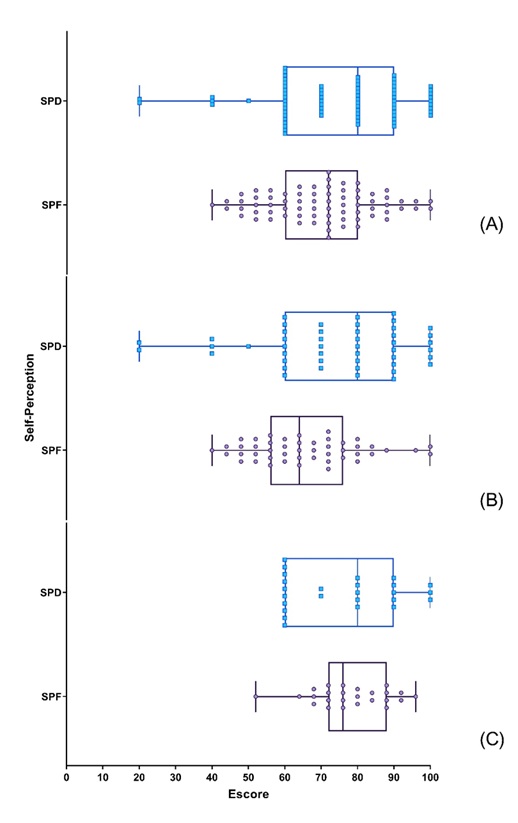
Figure 2 shows the differences between the self-perception index of physical demand and general physical fitness.
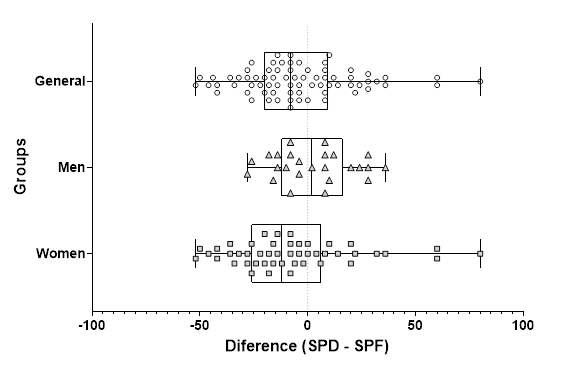
Table 4 presents the mean and standard deviation values of the various variables categorised by negative and positive physical demand level index.
Table 4. Comparison of anthropometric, physical fitness, and activity variables across perceived physical reserve index (PPRI) groups
| Negative | Neutral | Positive | F | p | |
| n=39 | n=9 | n=24 | |||
| Age (year) | 34.7 ± 4.2 | 34.6 ± 4.6 | 34.6 ± 4.0 | 0.004 | 1.00 |
| Body mass (kg) | 72.0 ± 11.7 | 69.1 ± 11.0 | 71.9 ± 10.1 | 0.25 | 0.78 |
| Stature (cm) | 168.6 ± 8.3 | 168.0 ± 7.6 | 169.3 ± 7.7 | 0.10 | 0.91 |
| BMI (kg·m-2) | 25.2 ± 3.0 | 24.7 ± 4.6 | 25.0 ± 10.2 | 0.15 | 0.86 |
| Push-up test (reps) | 24.8* ± 9.0 | 27.6 ± 9.5 | 37.0* ± 10.2 | 12.46 | <0.001 |
| Abdominal test (reps) | 36.1* ± 8.9 | 41.3 ± 9.2 | 45.7* ± 11.4 | 7.09 | <0.001 |
| VO2máx (mL·kg-1·min-1) | 33.5*# ± 5.6 | 38.5# ± 5.9 | 42.2* ± 6.1 | 16.98 | <0.001 |
| Daily time spent cycling (min) | 2.6 ± 0.6 | 2.5 ± 0.2 | 2.7 ± 0.4 | 0.34 | 0.71 |
| Work Index (a.u) | 2.9* ± 0.7 | 3.1 ± 0.9 | 3.5* ± 0.8 | 4.24 | 0.02 |
| Sport Index (a.u) | 10.4 ± 12.8 | 9.4 ± 4.1 | 10.3 ± 11.4 | 0.03 | 0.97 |
| Leisure Index (a.u) | 16.0 ± 12.9 | 15.0 ± 4.3 | 16.4 ± 11.4 | 0.05 | 0.95 |
Note: * denotes significant difference (p < 0.05) from Negative group. # denotes significant difference (p < 0.05) from Neutral group.
Discussion
This study investigated self-perceptions of physical demands and fitness among volunteers in the Brazilian Air Force Reserve Officer Training Course. It correlated these perceptions with performance in physical tests and the level of habitual physical activity. The analysis of these self-perceptions in the context of military training provides insight into the high demands of the TAI. While the use of self-reported tools (e.g., RPE) is established in occupational demand literature, this study contributes by applying these perceptions to assess the mismatch between perceived demand and perceived capacity in FAB officer training, which can inform future PES development. While the existing literature focuses on objective assessment, this research aimed to contrast subjective perception with objective data on performance and physical activity.
The results of the physical tests revealed significant differences between the sexes, with men exhibiting higher values, which is consistent with previous findings.29,30 The mean age and BMI did not differ significantly between the groups, indicating homogeneity in lifestyle behaviours such as nutrition and body composition, thus minimising the potential for confounding variables.
Regarding habitual physical activity, approximately 81% of the aspirants reported engaging in physical exercise for at least 60 minutes, three times a week (88% among men and 77% among women), a result that aligns with findings from studies on military personnel.31-33 Additionally, when compared to female participants, men in our study reported practising more physical activity in relation to daily cycling time, leisure indices and total score, supporting findings from other studies.34,35
The correlation between physical tests, habitual physical activity levels and self-perceptions revealed noteworthy findings.36 A negative and significant correlation was observed between the self-perceived physical demand index and performance in tests (push-ups, sit-ups, VO₂max), as well as the sports index. Greater physical fitness/capacity is associated with lower physical and/or physiological strain during tasks with fixed demands than in individuals with lower fitness/capacity. Studies on military populations support this.17,37,38 This suggests that better physical performance is associated with a lower perception of effort.39,40 In contrast, self-perceived physical fitness showed a positive correlation with test performance, indicating that individuals with higher self-perceived fitness tend to achieve better results. These largely intuitive findings reinforce the idea that more trained individuals perceive less effort for the same task and demonstrate better performance in physical tests. The correlations found support the significance of self-perceptions, despite their subjective nature, aligning with studies on the subjective perception of effort in various contexts and its potential utility as a monitoring tool in military training.41 Indeed, subjective self-reported measures have proven to be robust tools for monitoring training load and readiness in both athletic and tactical populations. The literature on using self-perceptions to monitor exercise intensity presents divergent results.21,42-44
To analyse the relationship between perceptions of physical demand and individual capacity, the difference between self-perceptions of physical demand and self-perceptions of physical fitness was calculated, yielding the PPRI. Analysis of this index revealed that the majority of military personnel in the total group, particularly women, had a negative PPRI, indicating that the perception of physical demand exceeds the perception of physical fitness required to carry out military tasks. This deficit condition may, in the long term, increase the risk of injuries and course dropout. This study’s contribution extends beyond merely confirming the importance of fitness. We specifically quantify a perceived mismatch between TAI demands and the entry-level capacity of volunteers, identified via the negative PPRI. This finding pinpoints a critical friction point in the training pipeline where demand may exceed capacity, thereby increasing injury risk and attrition. The definition of PES must, therefore, be based on tests that are valid predictors of occupational task performance. In this regard, studies such as Reilly et al.45 highlight the importance of developing and applying PFTs with reduced sex bias. The authors demonstrate that the choice of tests can significantly influence the fairness of the standards, suggesting that PFTs with greater performance overlap between sexes can facilitate the creation of more equitable and accurate PES. Our research, by focusing on physical fitness, contributes to this discussion by providing data to assess physical components relevant to military task performance, particularly given differences in perceived demand between sexes. In contrast, men showed no difference between physical demand and general physical fitness.
The analysis of PPRI in relation to physical tests and habitual physical activity level demonstrated that groups with different PPRI did not show significant differences in age groups or in activity indexes (work, leisure, and total), suggesting that these variables did not influence the PPRI classification. However, all physical tests showed significant differences between PPRI groups. A positive PPRI was associated with higher scores on physical tests, with a statistically significant difference compared to the neutral and negative groups. In addition to the relationship with the risk of dropping out of courses and injuries, some studies suggest that high levels of physical fitness are associated with greater performance at work.46,47 However, it is important to note that improving physical fitness does not necessarily lead improvements in cognitive and emotional aspects.46 The study by Brooks and Greenberg suggests that, to protect wellbeing and enhance performance, military organisations should also prioritise strengthening relationships between employees and their supervisors/peers.48
Our finding that the TAI is perceived as ‘very demanding’ by 65% of the sample aligns with the broader literature on military initial training, which consistently reports high physical, physiological and psychological loads during basic and officer training programs internationally.
The observation that individuals with higher self-perceived physical fitness found the physical demands easier is a valuable insight. This suggests that self-perceived physical fitness, likely reflecting objective fitness, aligns with perceived demand. Objectively, fitter individuals experience less relative physiological strain for a given absolute task, which, in turn, results in a lower perception of effort.
Practical implications
The findings of this study offer actionable insights for the FAB. The identification of a negative PPRI (discussed below), which was particularly pronounced among female volunteers, suggests a significant mismatch between the perceived demands of the TAI and the self-perceived physical capacity of some incoming personnel. This mismatch is a known risk factor for musculoskeletal injury and course attrition.
Therefore, we suggest that the FAB consider implementing or recommending pre-conditioning programs for volunteers prior to the TAI. Such an intervention, targeting candidates (of both sexes) with lower self-reported or objective fitness levels, could help mitigate these risks, improve adaptation to training and ultimately increase course completion rates.
This study has limitations. Beyond the sample size and subjective nature of the instruments, the cross-sectional design prevented us from correlating initial fitness and the PPRI with objective course outcomes (i.e., completion vs attrition). A future longitudinal study to validate the predictive power of these measures is a necessary next step. However, it is believed that the methodology can be refined and used in future research as a potential tool for establishing the PES. Future research should also incorporate the cognitive and psychological aspects of work environments into the PES structure to provide a more holistic understanding.
Conclusion
This initial study evaluating self-perceptions in the context of the FAB TAI demonstrated the relevance of subjective perceptions to physical demand and physical fitness, and their associations with objective measures of physical performance and habitual physical activity. The results suggest that perceptions of demand can influence how volunteers experience training, while the self-perceptions of physical fitness align with actual physical performance. The identification of a predominantly negative PPRI in the sample, especially among women, may have implications for injury risk and adaptation to the course, reinforcing the importance of considering self-perceptions in planning military training. Specifically, this study informs future PES development by: 1) justifying the need for a minimum entry standard, given the high perceived demand of the TAI; 2) identifying the key fitness components (aerobic and muscular) that are correlated with lower perceived demand; and 3) highlighting a high-risk group (those with a negative PPRI) whom a PES should aim to screen for or identify for pre-conditioning..