
Introduction
Outpatient services frequently suffer from prolonged in-clinic waiting times, inefficient workflows and delays in obtaining diagnostic results before specialist consultations.1 These inefficiencies negatively affect patient satisfaction, strain hospital resources, and, in military healthcare, may contribute to delays in evaluation and treatment pathways relevant to operational readiness.2 Factors contributing to prolonged waiting times include structural limitations, mismatches between physician schedules and registration hours, and inefficiencies in diagnostic test ordering and administrative flow. An analysis using the Donabedian framework further showed that the structural, process, and outcome domains collectively determine waiting-time performance, underscoring that the problem is multidimensional rather than purely operational.3 Although measures such as queue management, additional staffing and electronic health records have been introduced, they have not fully resolved these inefficiencies.1,2
To date, most innovations have focused on improving diagnostic accuracy through artificial intelligence (AI) in imaging or clinical decision support.4,5 In contrast, fewer studies have examined the role of AI in optimising diagnostic workflows in outpatient settings, although workflow inefficiencies remain a major contributor to delayed care. In many health systems, patients referred to outpatient specialists are still required to undergo laboratory or imaging investigations only after the initial consultation, resulting in repeat visits, prolonged total visit duration and fragmented diagnostic pathways.6,7
This pattern is not unique to any single country. Evidence from diverse healthcare systems demonstrates that outpatient waiting times frequently exceed recommended benchmarks, reflecting persistent structural and process-level inefficiencies. For example, despite national targets recommending outpatient waiting times of 60 minutes or less,8 hospital-based studies in Indonesia have consistently reported substantially longer waits across general and subspecialty clinics.2,9,10 These findings illustrate how fragmented diagnostic workflows can undermine efficiency even in settings with established policy standards.
Against this backdrop, AI offers new opportunities to streamline outpatient diagnostic workflows by automating triage, predicting required investigations and aligning test ordering with consultations. Early evidence from many nations suggests that AI can significantly reduce waiting times, consultation durations and overall visit length while maintaining or even improving diagnostic performance 11–14. However, these findings have yet to be systematically synthesised, particularly in relation to military health services, where the stakes of efficiency and readiness are uniquely high. Therefore, this systematic review aims to consolidate existing evidence on the impact of AI in optimising outpatient diagnostic workflows, focusing on in-clinic workflow efficiency, waiting time, consultation duration and patient flow.
Materials and methods
Protocol and eligibility criteria
The systematic review was conducted in accordance with the PRISMA 2020 reporting guidelines, with search reporting aligned to PRISMA-S. The protocol was developed a priori, outlining objectives, eligibility criteria (PICOS), outcomes of interest and planned analyses. Specific analytic considerations included converting medians and interquartile ranges to means and standard deviations where appropriate, and using subgroup analyses based on study design. Studies were eligible if they met the following PICOS criteria:
a. Population: Outpatient and ambulatory settings, including urgent care services, were considered eligible, provided the AI intervention was applied within the diagnostic or patient flow process. Inpatient and emergency department studies were excluded.
b. Intervention: Use of AI-based tools or systems applied within the diagnostic workflow, such as triage platforms, pre-consultation assistants, automated or predictive scheduling, AI-based test ordering or workflow optimisation algorithms.
c. Comparator: Conventional or non-AI workflows, including standard outpatient consultation or manual scheduling and test ordering.
d. Outcomes:
– Primary outcomes: Time efficiency metrics, specifically waiting or queuing time, consultation duration and total visit time.
– Study design: Randomised controlled trials, cohort studies and before–and–after observational designs were eligible. Case reports, narrative reviews, editorials and technical feasibility studies without patient- or system-level outcomes were excluded.
Information sources and search strategy
Relevant studies were identified through comprehensive searches of PubMed, Embase, Scopus, Web of Science, and Cochrane CENTRAL, from 2020 to 2025. In addition, the reference lists of included studies and relevant systematic reviews were manually screened to identify additional eligible publications.
The search strategy combined controlled vocabulary (e.g., MeSH and Emtree terms) and free-text keywords related to artificial intelligence, machine learning, deep learning, clinical decision support, outpatient care, referral, workflow, waiting time and consultation duration. Search syntax was tailored to each database. No restrictions were placed on the year of publication, but only studies published in English or Indonesian were considered.
Study selection
All records identified from database searches were imported into a reference management system, and duplicate entries were removed. Titles and abstracts were then screened independently by two reviewers against the eligibility criteria. Full texts of potentially relevant articles were retrieved and assessed in detail for inclusion. Any disagreements regarding study eligibility were resolved through discussion or, when necessary, by consultation with a third reviewer. The entire study selection process was documented using a PRISMA 2020 flow diagram, detailing the number of records identified, screened, excluded (with reasons), and included in the review.
The electronic database search across PubMed, Scopus, Embase, Web of Science, and Cochrane CENTRAL (publication years 2020–2025) initially identified 2098 records. After removing 705 duplicates, 1393 unique articles remained for screening. During the title and abstract screening stage, 1268 articles were excluded as they did not address AI in outpatient settings, focused solely on inpatient or emergency populations, or did not report relevant workflow or diagnostic outcomes. This left 125 full-text articles for detailed eligibility assessment.
Of these, 120 studies were excluded for the following reasons: non-outpatient population (n = 29), lack of an AI intervention (n = 33), lack of workflow or time-related outcomes (n = 41), or conference abstracts/duplicate datasets without sufficient data (n = 17). Ultimately, five studies met all inclusion criteria and were incorporated into the qualitative and quantitative synthesis. These comprised two randomised controlled trials and three observational studies. The PRISMA flow diagram of the study selection process is shown in Figure 1.
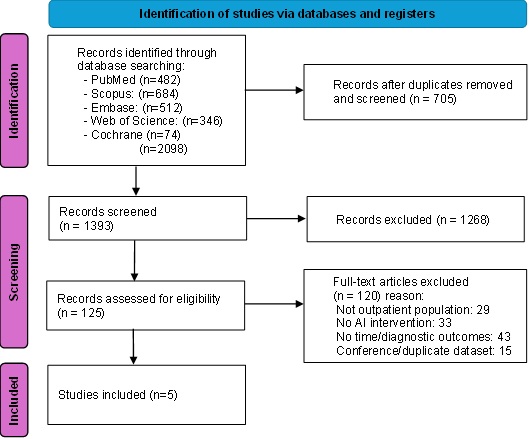
Figure 1 PRISMA Flow Diagram of Study Selection Process
Data extraction
Data from the included studies were independently extracted by two reviewers using a standardised form. Extracted information included:
– Study characteristics: author, year of publication, country, study design, setting, sample size and patient population.
– Intervention details: type of AI tool (e.g., triage assistant, predictive scheduling, diagnostic decision support), purpose and integration within the outpatient diagnostic workflow.
– Comparator: description of conventional or non-AI workflows.
– Outcomes: primary outcomes (waiting or queuing time, consultation duration, total visit time).
– Quantitative data: measures of central tendency and dispersion (means and standard deviations; or medians and interquartile ranges, later converted to means and SDs when possible).
Where necessary, corresponding authors were contacted for clarification or additional information. Extracted data were cross-checked, and any discrepancies were resolved through discussion to ensure accuracy.
Table 1Characteristics of included studies
| Author, year | Country | Design | Sample size | Setting | AI intervention | Comparator | Outcomes measured |
| Li, et al. 202117 | China | Retrospective cohort (propensity matched) | 12 342 visits | Tertiary hospital outpatient clinics | “XIAO Yi” AI module for auto-ordering diagnostic tests before consultation | Standard outpatient workflow (doctor orders tests during consultation) | Waiting time (registration → test start), total cost |
| Li, et al. 202220 | China | Randomised controlled trial | 626 paediatric patients | Paediatric outpatient clinics | “Smart-Doctor” AI assistant for pre-consultation triage and test ordering | Standard process (doctor-led test ordering during consultation) | Waiting time, consultation duration, total visit time, satisfaction, cost |
| Bin, et al.19 | Brazil | Prospective before–after | 38 042 urgent care visits | Urgent care centre during COVID-19 | Digital AI solution (RPA) for automated registration & triage | Pre-implementation manual registration | Waiting time, registration efficiency, staff workload |
| Harada, Shimizu21 | Japan | Observational before–after (hospital-level) | 21 615 outpatient visits (15 000 pre, 6615 post) | General hospital, outpatient diagnostic services | AI Monshin, an AI-based medical questionnaire integrated with the HIS | Pre-implementation routine workflow (no AI Monshin) | Waiting time reduction, diagnostic workflow efficiency, patient characteristics |
| Strömblad, et al.18 | USA | Randomised controlled trial (cluster, surgical oncology) | 683 patients | Outpatient surgical oncology scheduling (colorectal & gynaecology) | Machine-learning model to predict surgical case duration for OR scheduling | Standard scheduling (EHR estimates + surgeon input) | Presurgical waiting time, total facility time before surgery, scheduling accuracy |
Risk of bias assessment
The methodological quality of the included studies was assessed based on study design. For randomised controlled trials, the Cochrane Risk of Bias 2 (RoB 2) tool was applied, evaluating randomisation, deviations from intended interventions, missing outcome data, outcome measurement and reporting bias. For non-randomised and observational studies, the ROBINS-I tool (Risk Of Bias In Non-randomised Studies of Interventions) was used to assess confounding, participant selection, intervention classification, deviations from intended interventions, missing data, outcome measurement and selective reporting.
Two reviewers independently performed the risk of bias assessment. Disagreements were resolved by consensus or consultation with a third reviewer. The overall risk of bias for each study was summarised graphically and narratively to inform interpretation of the evidence.
Data synthesis and analysis
Outcomes were synthesised both narratively and quantitatively. For time-related outcomes, mean and standard deviation values were extracted directly or estimated from medians and interquartile ranges using established statistical methods.15,16 Continuous outcomes (e.g., waiting time) were analysed using mean differences (MDs) with 95% confidence intervals (CIs).
Meta-analyses were performed using a random-effects model (DerSimonian–Laird method) to account for between-study heterogeneity. Statistical heterogeneity was quantified with the I² statistic, with values of 25%, 50%, and 75% representing low, moderate and high heterogeneity, respectively. Subgroup analyses were prespecified by study design (randomised controlled trials vs observational studies). Random-effects meta-analyses were conducted using RevMan 5.4. Formal assessment of publication bias was not performed because fewer than 10 studies were included.
Results
Risk of bias assessment
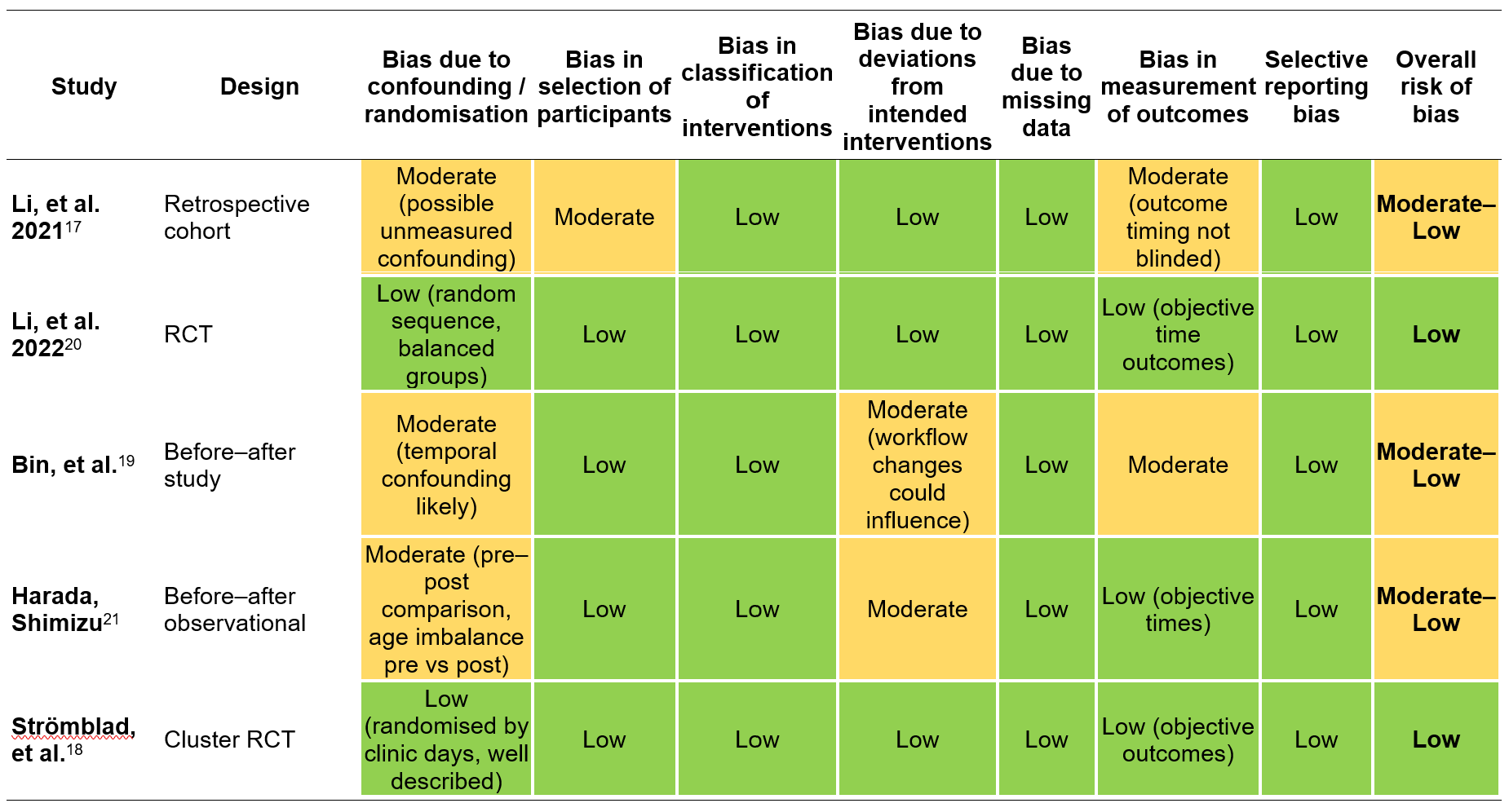
Risk of bias was lowest in the two RCTs,17,18 all of which applied adequate randomisation, concealment and objective outcome measures, resulting in low overall risk. Among the non-randomised studies, three were judged to have moderate to low risk, with some potential for confounding but fewer critical threats to validity.19-21
Importantly, outcome measurement bias was generally low across all studies because most relied on objective, time-based or diagnostic metrics. Overall, the evidence base is strengthened by two low-risk RCTs, while non-randomised studies provide complementary but less robust findings (Table 2).
Table 2Risk of bias assessment of included studies
Time-based outcomes
Five studies, including two randomised controlled trials and three observational cohorts, evaluated the impact of AI on outpatient waiting times. The pooled analysis in Table 3 demonstrated a significant reduction of 33 minutes on average in waiting time for patients managed with AI-assisted workflows compared to standard care (MD -33.26 minutes, 95% CI -51.07 to -15.44, p = 0.0003).
Table 3Forest plot of artificial intelligence on outpatient waiting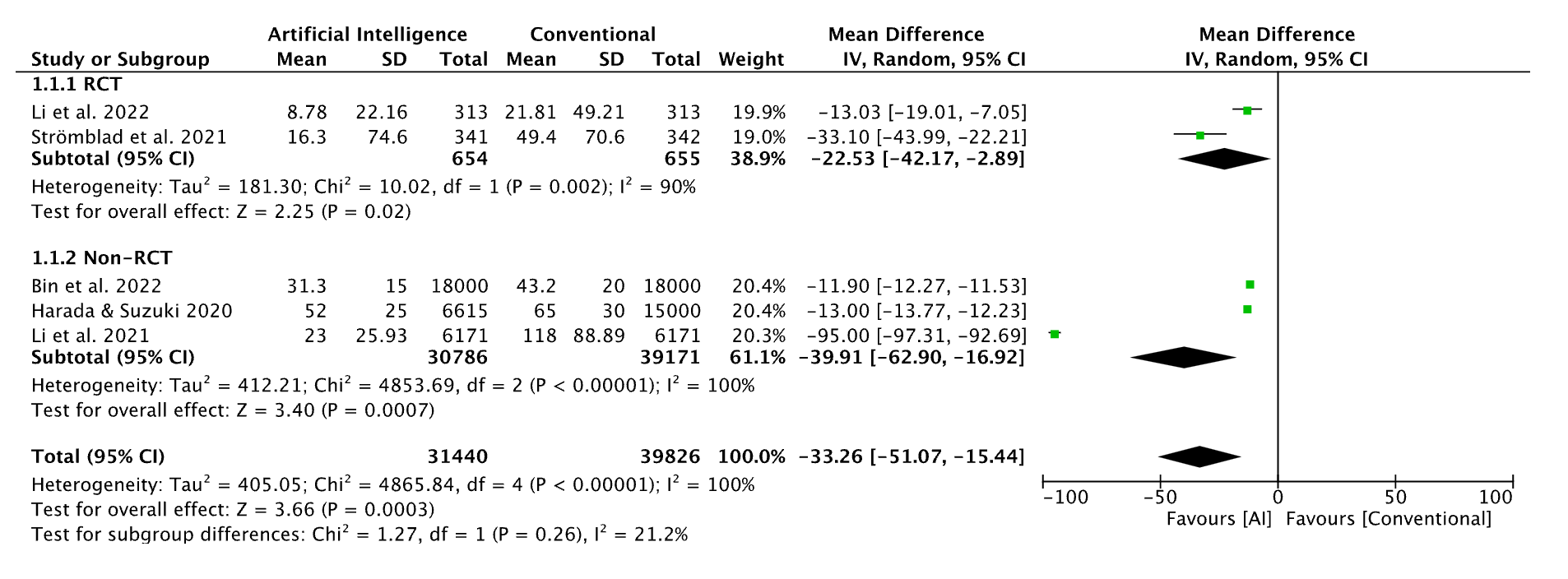
Although heterogeneity was high (I² = 100%), the effect size favoured AI across all studies. Subgroup analysis by study design showed that RCTs reported a smaller but still significant reduction (MD -22.53 minutes, 95% CI -42.17 to -2.89), whereas observational studies reported a larger effect (MD -39.91 minutes, 95% CI -62.90 to -16.92). The test for subgroup differences was not significant (p = 0.26).
These findings suggest that, despite variability in clinical context and intervention type, AI-assisted workflows were associated with reduced waiting times across included studies. Larger effect sizes in observational studies may reflect broader implementation contexts or residual confounding, while RCTs provide more conservative estimates of benefit. Importantly, reduced waiting time should not automatically be interpreted as improved overall clinical efficiency or quality of care. None of the included studies comprehensively evaluated the appropriateness of investigations, unnecessary testing, diagnostic accuracy or downstream clinical outcomes. Consequently, while AI-assisted workflows appear to improve in-clinic time efficiency, their broader clinical impact remains uncertain.
Discussion
The challenges in outpatient care extend beyond long waiting times. At their core, they reflect inefficient diagnostic workflows: patients often meet a specialist only to be redirected for laboratory or imaging tests, with results available days or weeks later. This fragmentation frequently leads to delayed diagnosis, a problem repeatedly highlighted in patient safety research. Webster et al. emphasise that missed or delayed diagnoses in ambulatory settings—commonly due to initial failure to order appropriate tests or lack of follow-up—can result in severe harm or even death.22 Such delays may be relevant for conditions with subtle or non-specific early presentations, including malignancies, chronic infections or autoimmune diseases, where delayed evaluation can complicate timely management. Similar concerns were highlighted by Wright et al., who identified that poor coordination in ordering and following up on tests is a major contributor to diagnostic error in primary and outpatient care.23 Although delays in diagnostic workflows may contribute to fragmented care, the included studies primarily evaluated time-based outcomes rather than diagnostic accuracy or treatment outcomes. Accordingly, any potential impact of AI-assisted workflows on diagnostic safety remains speculative and requires further investigation. AI-assisted workflows may reduce administrative delays and could potentially support earlier diagnostic processes, although the included studies did not directly evaluate diagnostic accuracy or patient outcomes.
This systematic review and meta-analysis demonstrate that integrating AI into outpatient workflows reduces patient waiting times compared with conventional approaches. Across five included studies representing over 70 000 outpatient encounters, AI interventions shortened waiting times by an average of 33 minutes. Although heterogeneity was high, the direction of effect generally favoured AI-assisted workflows, suggesting that AI is associated with improvements in in-clinic workflow efficiency across clinical settings or study design. Importantly, the outcomes evaluated in this review primarily reflect in-clinic workflow efficiency rather than access-to-care metrics such as referral-to-appointment time.
Our findings align with prior scoping and narrative reviews that have described AI’s potential to optimise patient flow, triage and scheduling in healthcare.11 Previous research in primary care and radiology has highlighted AI’s capacity to streamline diagnostic steps and reduce bottlenecks.4,13 However, most of these studies were descriptive and did not quantify the impact on time outcomes. By synthesising empirical data from randomised and observational studies, the present review provides stronger evidence that AI is associated with reduced workflow inefficiencies in outpatient care. Importantly, these benefits were observed across diverse contexts—from surgical oncology scheduling to paediatric clinics and urgent care—indicating broad applicability.
The substantial heterogeneity observed in this meta-analysis was likely driven by differences in intervention type, healthcare setting, baseline workflow structure and study design across the included studies. AI interventions ranged from pre-consultation test ordering and triage systems to automated registration and predictive scheduling, implemented in diverse outpatient environments including urgent care, paediatric clinics and surgical services. In general, observational studies demonstrated larger effect sizes than randomised trials, possibly reflecting residual confounding and broader system-level workflow changes. Despite elevated I² values, the direction of effect consistently favoured AI-assisted workflows across studies, supporting a potential association between AI implementation and reduced in-clinic waiting times while warranting cautious interpretation due to contextual variability.
For military healthcare systems, the implications are particularly relevant. Timely access to diagnostics and reduced waiting times may contribute to operational readiness by reducing delays in evaluation and diagnostic workflow.24,25 AI-driven outpatient workflows may also optimise resource utilisation in settings where staffing and specialist availability are limited, such as military hospitals or field deployments.26
Outpatient services in military hospitals are essential for active-duty personnel, veterans, retirees and their families, with utilisation, satisfaction and waiting times reported across multiple countries. Studies from military hospitals in Pakistan and Iran show that patient satisfaction is strongly influenced by reception services, physician performance, access, waiting time and clinic environment, emphasising the importance of efficient queue management and patient flow.27,28
Implementation of AI-assisted workflows in military healthcare systems requires careful attention to governance, clinician oversight, data security and bias mitigation.29 Existing military and healthcare AI frameworks emphasise the importance of transparency, validation and ongoing monitoring to ensure that AI tools support rather than replace clinical judgement.30 As military hospitals increasingly explore AI applications in outpatient care, further evaluation of safety, reliability and real-world effectiveness will remain essential.
Nevertheless, limitations must be acknowledged: the small number of eligible studies, the predominance of single-country data from Asia, and the exclusion of diagnostic accuracy outcomes due to insufficient raw data. Additionally, most studies focused primarily on time-based outcomes without assessing whether AI-assisted investigations were clinically appropriate or associated with improved patient outcomes. Future research should include multicentre trials with standardised outcome definitions, evaluate cost-effectiveness and incorporate patient-centred measures such as satisfaction and quality of care alongside efficiency gains. Future studies should also evaluate clinically meaningful outcomes, including appropriateness of investigations, diagnostic accuracy, unnecessary testing, patient safety, and treatment timeliness, in addition to time-based workflow measures.
Military health systems implications
The findings of this review are particular relevant to military health systems, where outpatient services play a critical role in determining medical readiness, fitness-for-duty decisions and timely return to operational status. Delays in outpatient diagnostics may extend periods of limited duty, defer treatment initiation and increase downstream healthcare utilisation, all of which can affect force readiness and resource allocation.24,25 In this context, efficiency gains achieved through AI-assisted diagnostic workflows may support more timely clinical decision-making without necessarily increasing workforce or infrastructure. Although none of the included studies was conducted in dedicated military healthcare settings, this limits the direct generalizability of the findings to military outpatient systems.
Military healthcare settings often operate under unique constraints, including limited specialist availability, high patient throughput during training cycles or deployments, and the need to balance clinical care with operational demands. Prior studies within military treatment facilities have highlighted the importance of streamlined care pathways in reducing time away from duty and improving readiness-related outcomes.25 AI-assisted outpatient workflows that anticipate diagnostic needs before specialist consultation may help mitigate these constraints by optimising patient flow and reducing unnecessary repeat visits. However, the relationship between shorter in-clinic waiting times and operational readiness remains indirect and was not directly evaluated in the included studies.
Nevertheless, implementation within military health systems requires careful consideration of governance, accountability and safety. Hierarchical clinical environments and high workloads may increase susceptibility to automation bias, particularly when AI-generated recommendations are perceived as authoritative.24 Accordingly, AI-assisted diagnostic workflows should be designed to preserve clinician oversight, clearly delineate responsibility for diagnostic decisions, and ensure reliable follow-up of test results, consistent with established principles of diagnostic safety.23,30
Importantly, the relevance of these findings extends beyond peacetime military hospitals. In austere or resource-constrained environments, including field hospitals and deployment settings, the ability to streamline diagnostic workflows and reduce delays may be especially valuable. However, evidence supporting the implementation of AI in such contexts remains limited. The applicability of these findings to operational or deployment environments, therefore, remains uncertain. Future military-focused studies should prioritise clinically meaningful outcomes such as diagnostic appropriateness, treatment timeliness, return-to-duty interval and patient outcomes rather than relying solely on reductions in waiting time.29,30
Conclusion
This systematic review and meta-analysis indicate that artificial intelligence–assisted outpatient diagnostic workflows are associated with reductions in-clinic waiting time across diverse healthcare settings. Although substantial heterogeneity was observed, the direction of effect generally favoured AI-assisted approaches, indicating a potential benefit in outpatient workflow when AI is applied to diagnostic workflow processes rather than diagnostic replacement.
However, the included studies primarily evaluated time-based outcomes and did not directly assess diagnostic appropriateness, patient safety, clinical outcomes or operational readiness. Consequently, reductions in waiting time should not automatically be interpreted as improvements in quality of care or readiness-related outcomes. Nevertheless, more streamlined diagnostic workflows and earlier alignment of testing with consultation may contribute to more efficient outpatient care delivery, particularly in systems operating under staffing and resource constraints, including military healthcare settings.
Further research is needed to evaluate the clinical appropriateness of AI-assisted investigations, diagnostic accuracy, patient outcomes, cost-effectiveness and applicability in military-specific, resource-constrained environments. Future studies should also examine whether improvements in workflow efficiency translate into meaningful benefits in treatment timeliness, continuity of care and readiness-related outcomes. Careful governance, clinician oversight and rigorous validation will remain essential for safe implementation.
Acknowledgements
The authors would like to thank colleagues who provided constructive feedback during the conceptual development of this manuscript. No individuals meeting the criteria for authorship were omitted.