

Health Effects of Sport and Volunteering in a Military Context
Abstract When considering military fitness, the focus must be on psychological and physiological ability, which are themselves influenced by health. Health itself is a product of several factors, as will be highlighted in the current study. To assess health and its implications in a military context, a questionnaire was administered to 555 participants during and… Read more »
Building Strength at Home: Addressing Domestic and Family Violence to Prevent Suicide in Australian Defence Communities
Introduction The Royal Commission into Defence and Veteran Suicide has drawn national attention to the urgent need to address suicide among serving and ex serving members of the Australian Defence Force (ADF).1,2 The Commission report includes a series of important recommendations to reduce the prevalence of suicide, many of which are underway Nevertheless, one significant recommendation… Read more »
Relations Between Physical and Emotional Health and Psychological Stress in Trauma-Exposed Veterans with Emotional Disorders
Abstract Background: Exposure to potentially traumatic events (PTEs) is common, especially in veterans. There are psychological sequelae to PTE exposure, including stress and anxiety pathology, depressive symptoms, and PTSD. Identifying veterans at risk for elevated psychological distress following PTEs, as well as distress correlates, is critical to improving mental health screening efforts and minimising downstream… Read more »
Comparing Sense of Control between Veterans and Civilians using the Health and Retirement Study
ABSTRACT Background: Sense of control has been associated with age-related outcomes. Veterans may experience a reduced sense of control due to the sacrifices associated with military service—potentially contributing to increased health problems in this population. Purpose: This study seeks to understand how military service affects the sense of control in older veterans in the United… Read more »
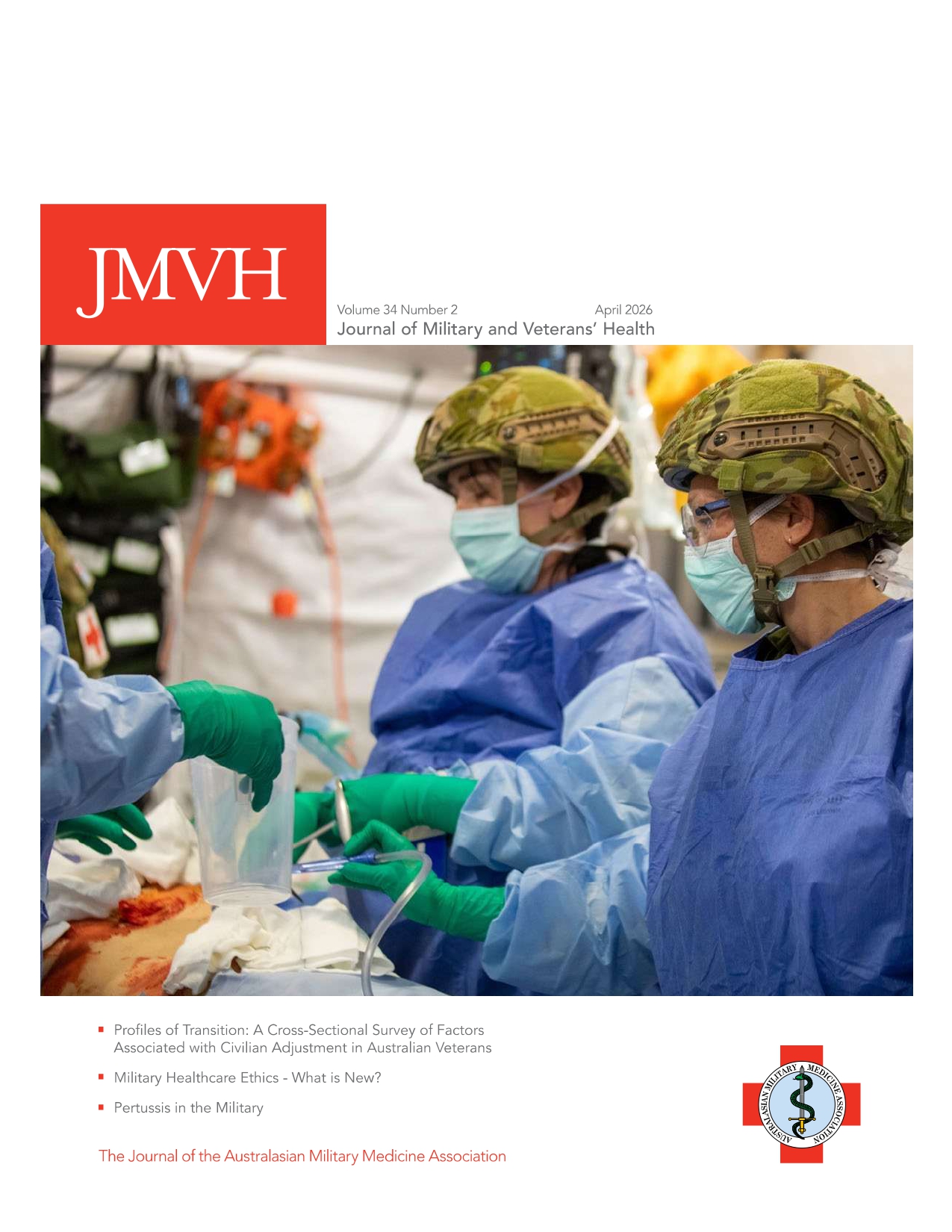
Profiles of Transition: A Cross-sectional Survey of Factors Associated with Civilian Adjustment in Australian Veterans
Abstract Background: This study builds on prior research suggesting that demographics and attributes can better predict positive or negative experiences in the military-to-civilian transition. Purpose: We measured differences in self-reported experience of military-to-civilian transitions on a range of in-service and post-service variables suggested in the literature. Materials and methods: Drawing on a survey of Australian… Read more »
Military Healthcare Ethics —What is New?
Abstract This paper reviews the field of military healthcare ethics since the 2022 review paper published in this journal. NATO STANAG, AMedP-8.19 Military Healthcare Ethics, was published in June 2025. ‘Dual loyalty’ remains at the heart of ethical tensions for military health professionals (MHPs). Current wars in Ukraine and the Middle East challenge the value… Read more »
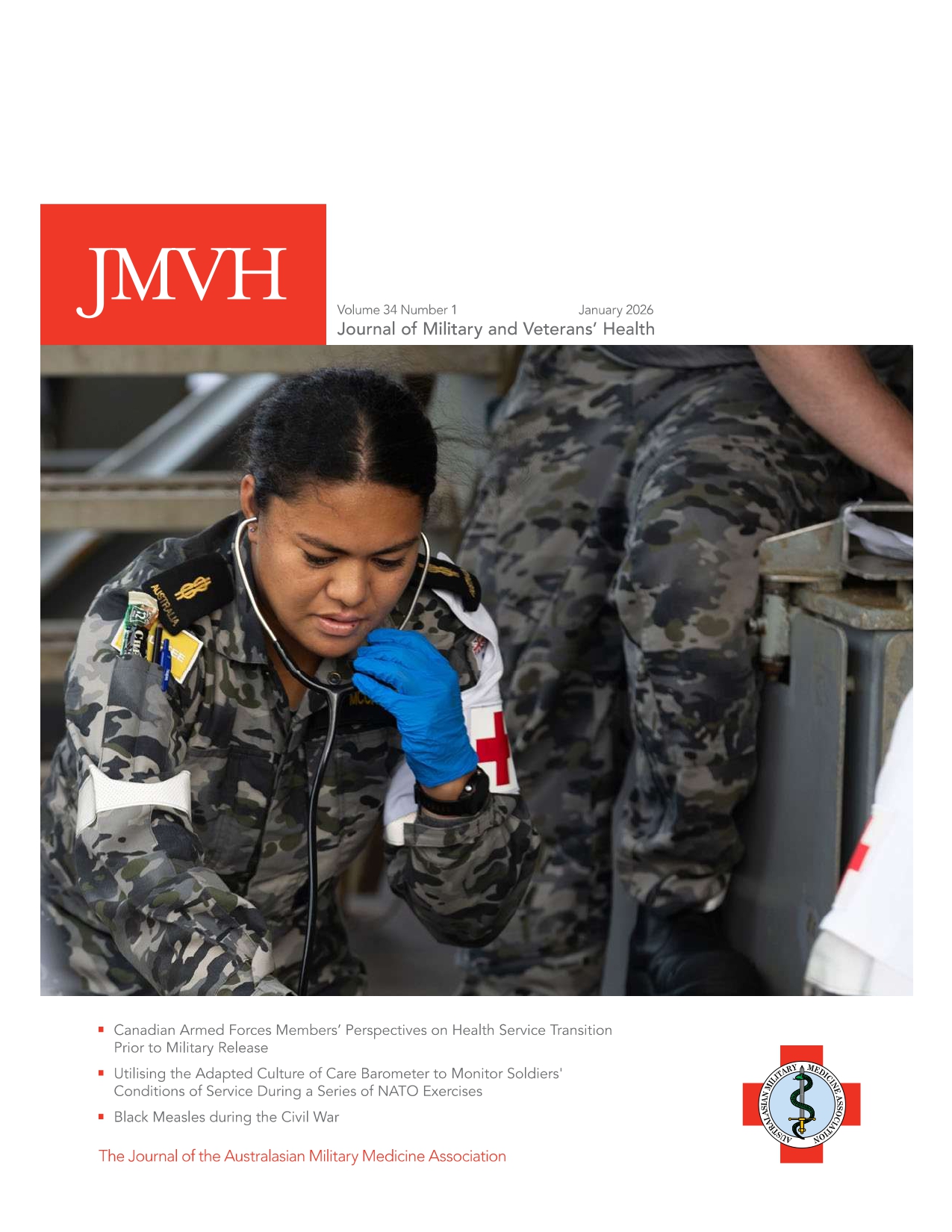
Canadian Armed Forces Suicide Risk and Protection over 16 years
Abstract Introduction: Canadian Armed Forces (CAF) soldiers and veterans face a higher suicide risk than the general population. However, differences between correlates of types of suicide expression, namely suicidal ideation (SI), suicide plans (SP) and suicide attempts (SA), have not been established. This study aimed to identify risk and protective factors for new-onset suicide behaviours… Read more »
Multinational Multi-Role Tanker Transport Unit and European Air Transport Command—A Two-Year European Collaboration in the Field of Strategic Aeromedical Evacuation
Abstract Introduction: The Multinational Multi Role Tanker Transport (MRTT) Unit (MMU) consists of nine A330 MRTT aircraft based in Eindhoven and Cologne. One is utilised as an aeromedical evacuation (AE) asset on a 24-hour notice-to-move standby. Six European partners participate in the unit. The European Air Transport Command (EATC) is an integrated command of seven… Read more »
Catalogue of Research Investigating the Health of Australian Defence Force Personnel, 2002–2023
Abstract Background The Australian Department of Defence commissioned a scoping review and catalogue of research investigating the health of Australian Defence Force (ADF) members, published between 2002 and 2023. Material and methods MEDLINE, Embase, PsycINFO, Cochrane Central Register of Controlled Trials and Web of Science databases were searched in April 2023 for peer-reviewed studies published… Read more »
Post-Rescue Deconfliction: Integrating the Tourniquet Traffic Light into Triage for Mass Casualty Surge Reduction
Abstract Evidence suggests that standard triage models are not adequate in threat-moderated settings like terrorist or intentional mass-violence events. Ten Second Triage offers an alternative triage model based on traumatic wounding patterns and immediate interventions for preventable causes of death, rather than physiological parameters. Over-triage may occur due to first responders’ low tolerance for tourniquet… Read more »
Pertussis in the Military
Abstract: Pertussis (whooping cough) is not typically considered an infectious disease of military significance, as its most severe manifestations are primarily restricted to unimmunised children. Pertussis is increasing, particularly in Australia and the Pacific Islands, due to falling immunisation rates and the post-COVID pandemic surge in all respiratory infections. Obscure outbreaks of chronic cough in… Read more »
Assessing spiritual wounds and injuries—Some Initial Thinking
Abstract This paper aims to provide some initial thinking on determining the basis for assessment of the existence, severity, and nature of a Spiritual Wound and Injury (SW&I) within an individual. The conditions, behaviours, and Red-Actions (serious, life-threatening, harmful) actions of an SW&I discussed in an earlier paper in this journal1 require a thorough and… Read more »
Changing military medical standards—Are we doing harm?
‘I am trying to arrange transport for two or three thousand “B” class men; they are absolutely unfit for service. Many of them do not disclose any organic disease upon a carefully conducted clinical examination, but are in and out of hospital, and are quite useless for front line, and practically useless for Home Service….Far… Read more »
Psychological Assessment for Military Selection: Past, Present and Future Applications
Abstract Psychological assessments for selecting military personnel have played a crucial role in enhancing training effectiveness, ensuring job success and, where possible, reducing mental health casualties in war zones. This article traces the development of psychological assessment for military selection through the World Wars to modern-day procedures. Two main themes emerge from this analysis: firstly,… Read more »
Injuries, Physical Fitness, and Body Mass Index in a Population of U.S. Army Reserve Personnel
Abstract Introduction US Army Reserve personnel are expected to meet the same fitness and readiness standards as their Active Duty counterparts, but little is known about health factors among Reservists. This investigation presents data on injuries, fitness and body mass index (BMI) for Reservists participating in a new health and fitness program. Methods Twenty-one US… Read more »
Effects of Lighting Conditions on Psychophysiological Re-sponses and Motor Skills in Warfighters During Close Quarter Combat Simulations
Abstract: This study examines the impact of lighting conditions (darkness, rotational light and continuous light) on warfighters’ psychophysiological responses and fine motor skills in close-quarter combat (CQC) simulations. The study assessed the rate of perceived exertion, blood lactate concentration, cortical arousal, isometric lumbar and leg strength, and the time required to reload a pistol magazine… Read more »
Psychological Coping Mechanisms in Military Physicians: A Qualitative Exploration of Stress Management Strategies
Abstract Background: This qualitative study investigates the coping strategies utilised by military physicians facing the dual demands of military service and healthcare provision. Recognising the unique stressors within this professional context, the study aims to identify both adaptive and maladaptive coping mechanisms employed by military physicians. Methods: A purposive sample of 18 military physicians from… Read more »
Creative Engagement by Wounded, Injured or Ill Australian Defence Force Personnel
Abstract While there has long been an extensive range of medical, pharmaceutical, psychological, physiological, spiritual and physical programs available to ADF personnel seeking health assistance, allied health practices—particularly creative arts interventions—are still relatively new in the wellbeing context. The Australian Defence Force Arts for Recovery, Resilience, Teamwork and Skills Program (hereafter, ADF ARRTS) is an… Read more »
Utilising the Adapted Culture of Care Barometer to Monitor Soldiers’ Conditions of Service during a Series of NATO Exercises
Abstract Background: Working conditions have a significant impact on job-related performance, and in the military context, this can affect the outcome of exercises and missions. Therefore, the scientific recording and consequentialist improvement of soldiers’ conditions of service is important. Purpose: This study aims to contribute to a deeper understanding and potentially improve the wellbeing and… Read more »
Assessing the Role and Employability of Military Advanced Practitioners in Deployed Pre-hospital Setting: A Qualitative Interview Study
Key messages APs support healthcare delivery and workforce flexibility in deployed PHEC environments. Military APs are autonomous and have the potential to operate independently in the Defence Medical Service and remote pre-hospital care. Multi-professional trust is key to AP autonomy in military pre-hospital care, but standardised roles and careers are needed to overcome hierarchical barriers… Read more »
2025 AMMA Conference